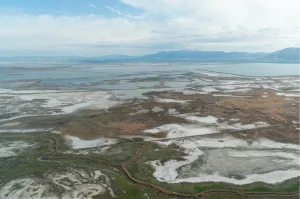
Nestled in a mountainous region in northwestern Iran is Lake Urmia, once the largest lake in the Middle East and the sixth largest saline lake in the world. In its glory days, Lake Urmia boasted over 50 islands and was home to hundreds of plant and animal species, including as many as 300,000 migratory flamingos that fed on a thriving population of brine shrimp.
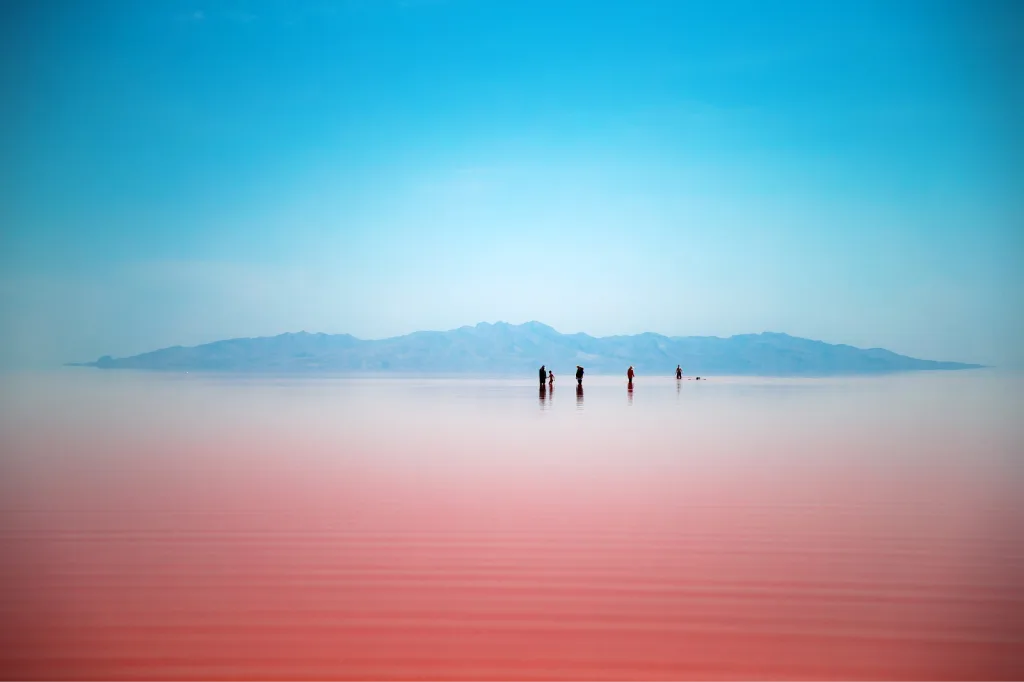
Lake Urmia is also considered to be one of Great Salt Lake’s sister lakes, partly due to shared features like size, shape, and elevation, but also its similar cultural significance to its community.
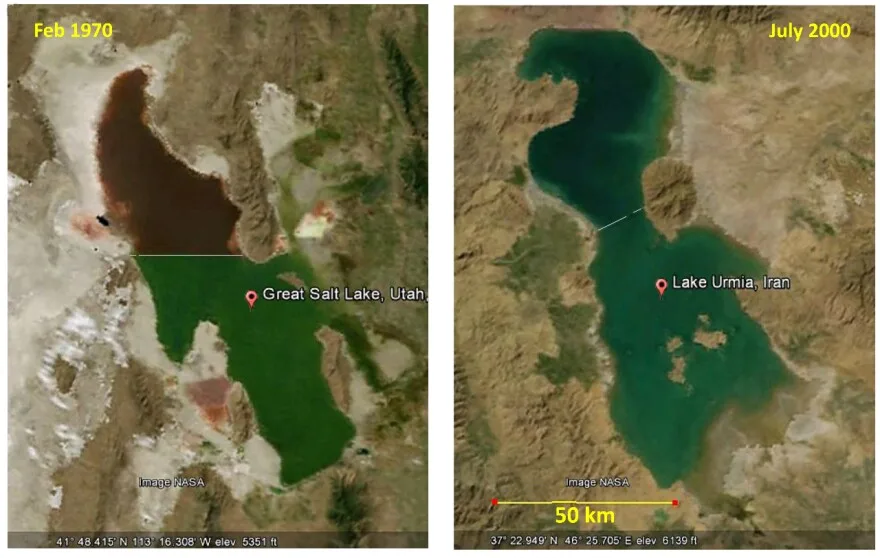
However, as of late 2025, Lake Urmia has almost completely dried up, with experts even referring to it as being at “a point of no return”—meaning the lake and its environment have collapsed to the point that they can no longer be restored.
Alarmingly, this happened quickly: Lake Urmia lost over 96% of its surface area in just 20 years.
So, what happened? And what can we learn from Lake Urmia as we work to restore Utah’s Great Salt Lake?
Lake Urmia’s Decline
Lake Urmia and Great Salt Lake have faced similar hardships. Both of these lakes are surrounded by densely populated communities, causing water to be diverted for human use, particularly for agriculture. In just the last three decades, around 50 dams have been constructed in Lake Urmia’s basin, and agriculture has continued to expand with a growing population.
While not the main cause of Lake Urmia’s decline, climate change has exacerbated the primarily human-caused problems the lake faces, increasing both the speed and intensity at which it has declined. Climate change impacts include lowering precipitation levels, increased temperatures, drought conditions, and evaporation rates.
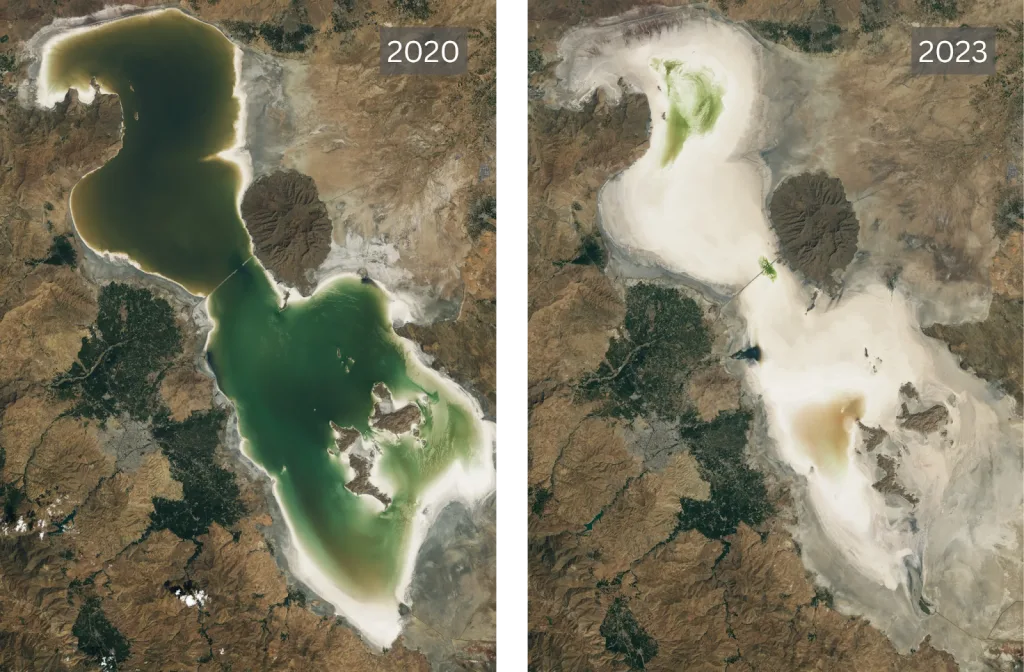
Lake Urmia’s decline doesn’t exist in isolation in Iran. The country as a whole is facing a water crisis, as its water resources are “being rapidly depleted due to climate change and human activities such as overuse, mismanagement, and pollution.”
The Iranian government has launched various initiatives to try and solve both its overarching water crisis and the rapid decline of Lake Urmia specifically. These initiatives have included designating Lake Urmia as a Wetland Protected Region in 1967, and establishing the Urmia Lake Restoration Program in 2013.
But, as agricultural expanded, climate change conditions worsened, and the Iranian government wasn’t able to quickly dedicate the necessary resources to Lake Urmia’s recovery, these initiatives ultimately failed. The lake saw short-lived recoveries due to years of increased rainfall—similar to what Great Salt Lake experienced in 2023—but these didn’t create conditions for long-term recovery.
Environmental and Cultural Consequences
The environmental consequences of the collapse of Lake Urmia are immense. There have been an increase in salt storms—fine sand particles that are picked up by wind and blown to surrounding places— damaging nearby crops and posing a threat to human health.
Species of plants and animals have also collapsed, including the brine shrimp population. Without this critical food source, thousands of migratory birds are mostly gone.
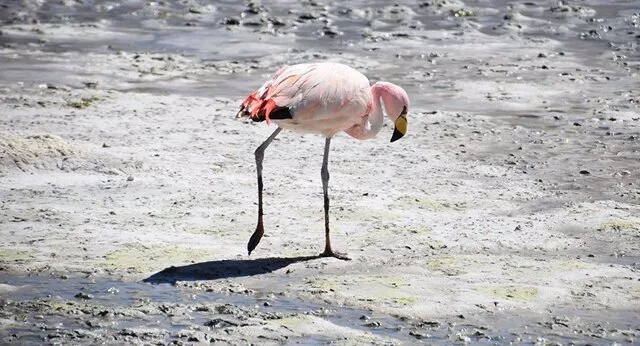
In addition to ecological consequences, there have also been enormous impacts to the region’s economy and culture.
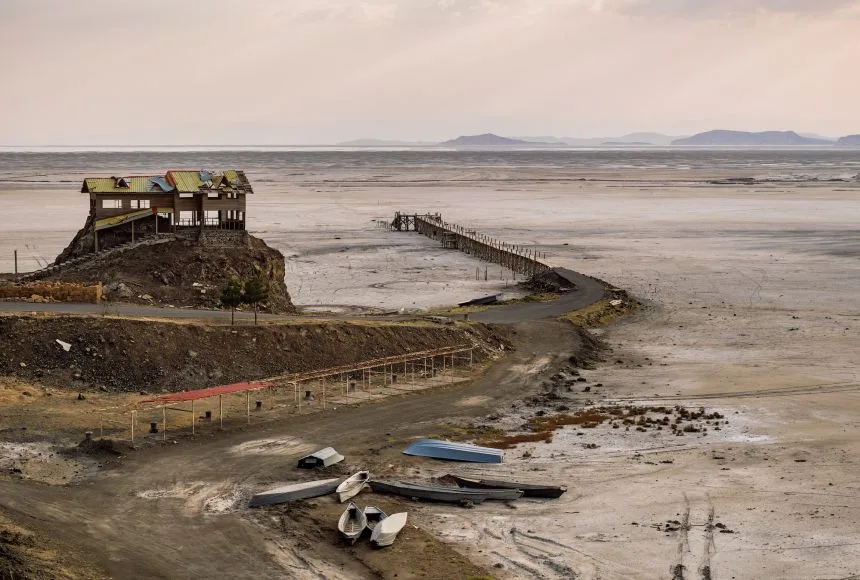
The lake, also referred to as “the turquoise jewel, held historical and cultural significance to Iran, serving as a hub on ancient trade routes. Urmia also used to be a popular tourist destination for activities such as bird-watching, swimming, birding, and bathing in the lake’s black mud. But the drying of the lake has led to a collapse of the local tourism industry.
Additionally, its collapse could lead to the potential forced migration of over 10 million people living near the lake who are directly affected by these environmental, economic, and cultural consequences.
What We Can Learn from Lake Urmia’s Story
Great Salt Lake does not have to suffer a similar fate: We can learn from the decline of Lake Urmia and other saline lakes to inform our restoration efforts.
Instead of being climate or science-related, the factors that led to Lake Urmia’s demise were political and cultural. Gaining support for Great Salt Lake across the political spectrum and altering water usage in Utah can make a meaningful difference in restoration efforts.
Between 2015-2019, Lake Urmia began to stabilize due to increased rain and snowpack, but this was short-lived. Utahns cannot rely on wetter seasons in Utah to fix this crisis nor equate years of heavy rainfall to long-term success. A full restoration of Great Salt Lake is going to take more drastic measures than what natural weather patterns can provide.
Lastly, it’s important we don’t wait too long. Investing money and resources to protect Great Salt Lake now will save our community from disastrous economic, environmental, and health consequences down the road.
Lainey Cartwright is a volunteer contributor.