Great Salt Lake Needs Your Help
Our lives depend on our Lake.
As the Lake shrinks, the consequences ripple across Utah and the surrounding states—showing up as toxic dust, shorter winters, water scarcity, and a more fragile future.
Across the world, over 100 saline lakes are in decline. No community has ever saved their terminal lake from collapse, but Utah can write a different ending.
Together, we can protect the place we call home—now and for generations to come. Let’s get to work.

We need your voice
Take Legislative Action
The 2027 Utah Legislative Session is approaching and our lawmakers will soon make critical decisions about water policy and funding. Your voice can help ensure Great Salt Lake remains a priority—and turn this moment into real progress.

Save Water, Save the Lake

Join the Movement
Great Salt Lake Water Level
Collapse
Critical
Healthy
Great Salt Lake water level data comes from USGS monitoring stations at the Saltair Boat Harbor and at Saline, UT. These data are averaged for the previous day at midnight each day, which is why our tracker displays yesterday’s date.

0
feet below the minimum healthy level
Great Salt Lake’s minimum healthy water level is 4,198’.

0
of the lakebed is exposed
Compared to the lake area at its natural elevation of 4,207’.

0
square miles of exposed lakebed
More exposed lakebed reduces habitat and increases dust storms

0
Full
Compared to the lake volume at its natural elevation of 4,207’.
Our lives depend on our Lake.
GREAT SALT LAKE, EXPLAINED
Great Salt Lake isn’t just a big, salty lake in Utah. It’s a vital ecosystem that influences air quality, supports a hemispherically important migratory bird highway, creates the “Greatest Snow on Earth,” and underpins major industries that contribute to the global economy.
And right now, Utah’s inland sea is on the verge of collapse.
Let’s learn about what Great Salt Lake is, and where it came from.
Our lives depend on our Lake.
The Problem
The impacts of a shrinking Great Salt Lake are here, real—and growing.
From toxic dust to economic losses and ecosystem collapse, the consequences of Great Salt Lake’s continual decline are hemispheric. But understanding the problem is only the first step.
The good news is, because we caused this, we can fix it.
Our lives depend on our Lake.
The Solution
Experts agree: returning water to the lake through conservation, smarter water markets, and better policy is the only sustainable solution. Utah lawmakers have already laid the groundwork for a lake rescue, but we are a long way from recovery.
Saving Great Salt Lake will cost about $2-5 billion over the next decade and will require systemic changes to Utah’s water management.
Now more than ever, we need your voice to hold our leaders accountable.
Utah has the opportunity to do what no community has done before: successfully save its saline lake, and provide a blueprint for the world.
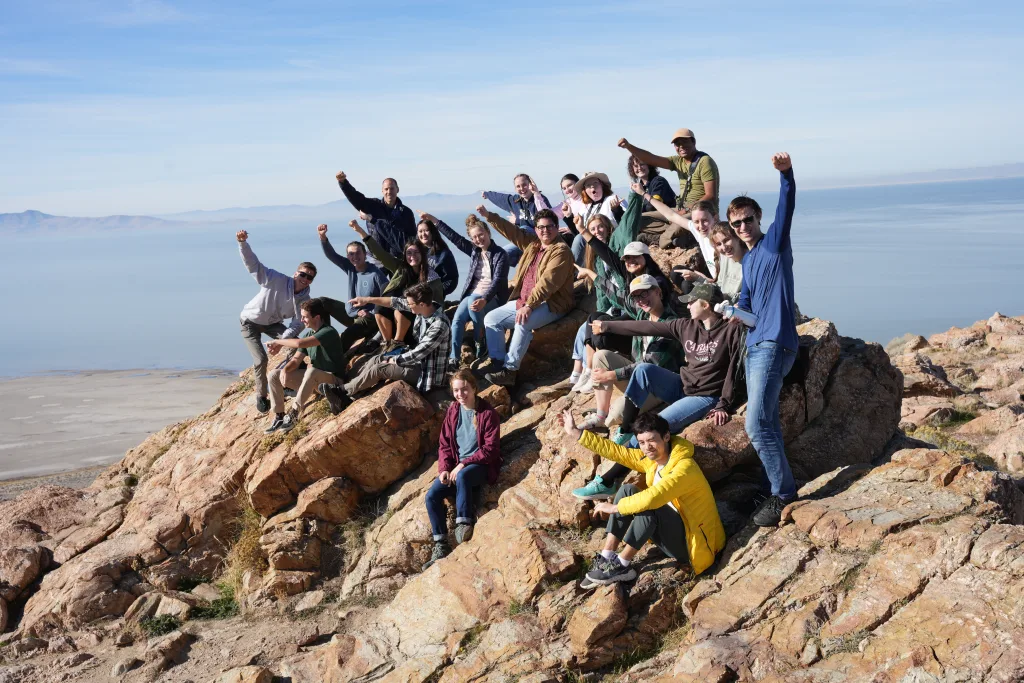
What is Grow the Flow?
Grow the Flow is a citizen-led movement uniting science, storytelling, and civic action to do what no community ever has before: save its saline lake before it's too late.
We collaborate with farmers, faith leaders, scientists, students, and everyday Utahns who believe that a healthy lake is the foundation of a thriving state. Together, we’re building the public will and political courage needed to secure lasting water policy, restore natural balance, and ensure that Great Salt Lake—and the people who depend on it—endure.
Common Questions About Great Salt Lake
How did Great Salt Lake form?
It’s a remnant of ancient Lake Bonneville, a massive Ice Age lake that once covered much of western Utah and parts of Nevada and Idaho. About 14,500 years ago, the lake catastrophically breached its natural dam at Red Rock Pass in Idaho—possibly triggered by a seismic event—causing one of the largest known floods in the Earth’s history. Great Salt Lake, Utah Lake, and Sevier Lake are among the remnants of ancient Lake Bonneville.
What kind of wildlife depend on Great Salt Lake?
Great Salt Lake is a vital stopover for about 12 million migratory birds each year along the Pacific Flyway, including Wilson’s phalaropes, eared grebes, American avocets, and pelicans. Many species rely on the lake’s brine shrimp and brine flies to fuel their long journeys. The surrounding wetlands also support coyotes, mule deer, muskrats, frogs, toads, and a rich variety of insects, making the lake one of North America’s most important and diverse wildlife habitats.
How much water does Great Salt Lake need to reach a healthy level?
Scientists estimate the lake needs an additional 1 million acre-feet of water per year to reach and sustain a healthy elevation—ideally above 4,198 feet above sea level. This will require a ~30% decrease in consumptive water use across the basin
How much of the Lake’s shrinking is caused by drought and climate change? How much is caused by human water use?
The vast majority of Great Salt Lake’s decline is caused by human water use, not climate change. Consumptive uses—primarily for agriculture, along with some urban and industrial demands—have reduced inflows by about 39%, lowering the lake by 11 feet, shrinking its surface area by 51%, and reducing its volume by 64%. Climate change has contributed to the lake’s decline by increasing evaporation, but its total impact so far is relatively small—accounting for only about 9% of the long-term loss.
What health problems are caused by breathing in Great Salt Lake dust?
Breathing dust from Great Salt lake can cause or worsen a range of health problems, including asthma, bronchitis, pneumonia, and cardiovascular issues like heart attacks and strokes. The lakebed contains fine particles (PM10 and PM2.5) and toxic metals such as arsenic, lead, and copper, which become airborne when the lake dries and the wind blows. Lab studies show this dust triggers inflammation and immune responses in lung tissue, and recent research links exposure to systemic inflammation, low birth weight, and even depression. Scientists are also concerned about long-term cancer risks: several of the metals found in the dust are known carcinogens, and while no definitive link has been established yet, experts warn that prolonged exposure could increase the risk of lung, bladder, and skin cancers—especially for communities living downwind.
Why is Great Salt Lake so salty?
Great Salt Lake has no outlet. Rivers bring in fresh water and minerals, but as water evaporates, the minerals—including salt—are left behind. Over thousands of years, the salt has concentrated to the point where salinity levels can reach 5-27%, depending on location and season.
What happens if the lake keeps shrinking?
If the lake continues to shrink, salinity will climb beyond what brine shrimp and brine flies can survive, collapsing the food chain for millions of migratory birds. The exposed lakebed can fuel dust storms that carry arsenic, mercury, and other pollutants into nearby communities—resulting in increased respiratory and other illnesses. Industries that depend on the lake’s minerals and brine shrimp harvests would face steep cutbacks or closure, while dust pollution and a smaller lake could shorten ski seasons, impact Utah’s real estate value, and disrupt the outdoor recreation economy. The loss of the lake would ripple through every part of the state’s environment, economy, and public health.
Does Great Salt Lake impact our snowpack?
Yes! Great Salt Lake helps generate “lake-effect snow,” where cold air passing over the lake picks up moisture and dumps it as snow on the Wasatch Mountains. As the lake shrinks, that snow-generating effect weakens—reducing the snowpack that Utah depends on for water supply. Great Salt Lake provides 5-10% of the snow in the Wasatch, and up to 50% of the annual precipitation in the Salt Lake Valley.
What health problems are caused by breathing in Great Salt Lake dust?
Breathing dust from Great Salt lake can cause or worsen a range of health problems, including asthma, bronchitis, pneumonia, and cardiovascular issues like heart attacks and strokes. The lakebed contains fine particles (PM10 and PM2.5) and toxic metals such as arsenic, lead, and copper, which become airborne when the lake dries and the wind blows. Lab studies show this dust triggers inflammation and immune responses in lung tissue, and recent research links exposure to systemic inflammation, low birth weight, and even depression. Scientists are also concerned about long-term cancer risks: several of the metals found in the dust are known carcinogens, and while no definitive link has been established yet, experts warn that prolonged exposure could increase the risk of lung, bladder, and skin cancers—especially for communities living downwind.
How much money does the Great Salt Lake economy generate each year?
The Great Salt Lake directly contributes an estimated $2.5 billion to Utah’s economy each year, supporting roughly 9,000 jobs across industries like mineral extraction, brine shrimp harvesting, and outdoor recreation. Evaporation from Great Salt Lake increases annual snowfall in nearby mountains by 5-10%, supporting another 20,000 jobs and an additional $1.8 billion in annual economic activity from the ski industry.
How do I get involved with ongoing efforts to save Great Salt Lake?
There are many different ways to make a difference!
Sign up for Grow the Flow’s newsletter, which will give you the inside scoop on community advocacy, events, and education around the lake’s recovery every week.
Contact your state legislators and urge them to support policies that protect Great Salt Lake.
Volunteer! Grow the Flow offers tailored volunteer opportunities to match your interests and strengths—from tabling and cleanups to birding tours. Got an event idea? We’ll help you bring it to life.
Join or start a local chapter to collaborate on initiatives like community events and legislative campaigns.
Attend public meetings like community forums, city council meetings, public hearings, and chapter meetings to voice your opinion and connect with other community members and activists.
Donate! Your donation helps fuel grassroots advocacy, policy work, education, and public engagement around Great Salt Lake.
Spread the word by talking to your friends, family, faith communities, and neighbors about what’s happening to Great Salt Lake and why it matters. Post on social media! The more people who understand the stakes, the more momentum we build toward change.
Lobby with us. During the Utah legislative session, Grow the Flow organizes weekly public advocacy days at the State Capitol, where volunteers meet directly with lawmakers to advocate for bold action to save the lake
Xeriscaping: Replace your water-thirsty lawn—or park strips—with low-water landscapes and earn up to $3 per square foot in rebates through Utah Water Savers’ Landscape Incentive Program.
Check out more Frequently Asked Questions here!